
The Evolution of Breast Reduction Surgery
The Evolution of Breast Reduction Surgery: Techniques and Trends
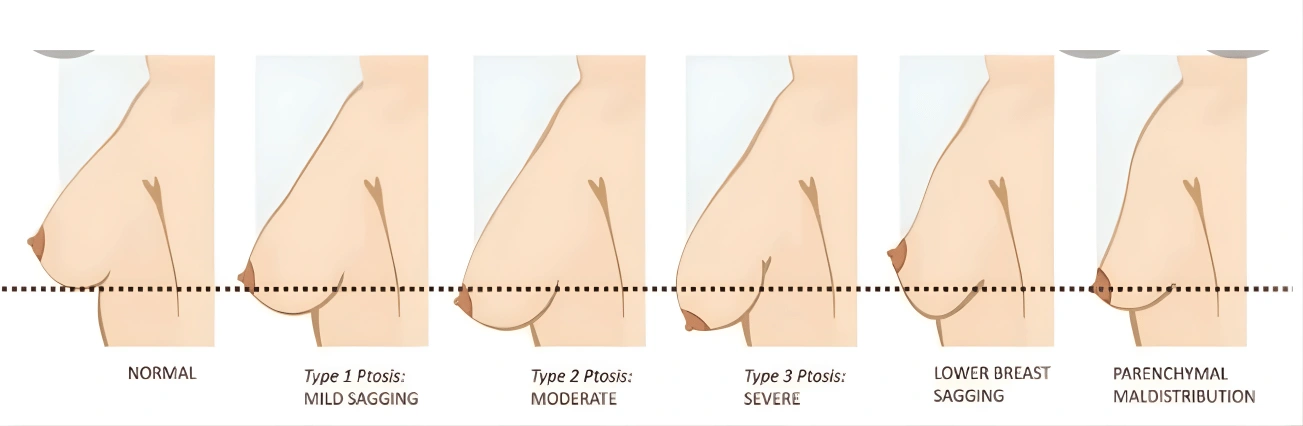
Breast reduction surgery has changed in many ways over the past few decades. It was once seen only as a procedure to relieve discomfort, but today it has become a personalized treatment for both function and appearance. People are now more open to discussing their physical concerns, and this has made breast reduction a common topic in clinics. You will learn how the procedure developed, what methods exist today, and what trends are shaping its future.
Breast reduction is no longer just about decreasing breast size. It is about helping people move better, feel confident, and reduce daily pain. This blog covers its history, modern surgical techniques, patient-focused trends, safety improvements, and what you should know if you are considering the procedure.
Early Approaches to Breast Reduction
Breast reduction has been performed in different forms for more than a century. Early surgeons focused mainly on removing excess tissue. The goals were to reduce size and decrease weight on the shoulders, neck, and back. These first procedures were longer, recovery was tough, and scarring was common.
Surgeons then began studying how to reshape and support the breast instead of only removing tissue. This shift helped patients get better cosmetic outcomes. It also improved comfort and movement. These earlier steps laid the foundation for modern techniques.
The Modern Era of Breast Reduction

Modern breast reduction focuses on balance, proportion, and long-term results. Surgeons now aim for a natural look that matches the patient's body structure. The techniques used today help preserve the nipple blood supply, reduce downtime, and improve results.
Key improvements include:
- Shorter scars
- Safer tissue removal
- Faster healing
- Better shaping of the breast
Surgeons also give importance to the patient's lifestyle. For example, athletes or new mothers may need a different plan than someone facing chronic shoulder pain.
The advancements in anesthesia and imaging have also made surgery safer. Surgeons can now plan the procedure while considering blood flow, nerve preservation, and the patient's goals.
Common Breast Reduction Techniques Used Today
Each surgical technique is chosen based on breast size, skin elasticity, and the patient's desired outcome. Here are the most used approaches.
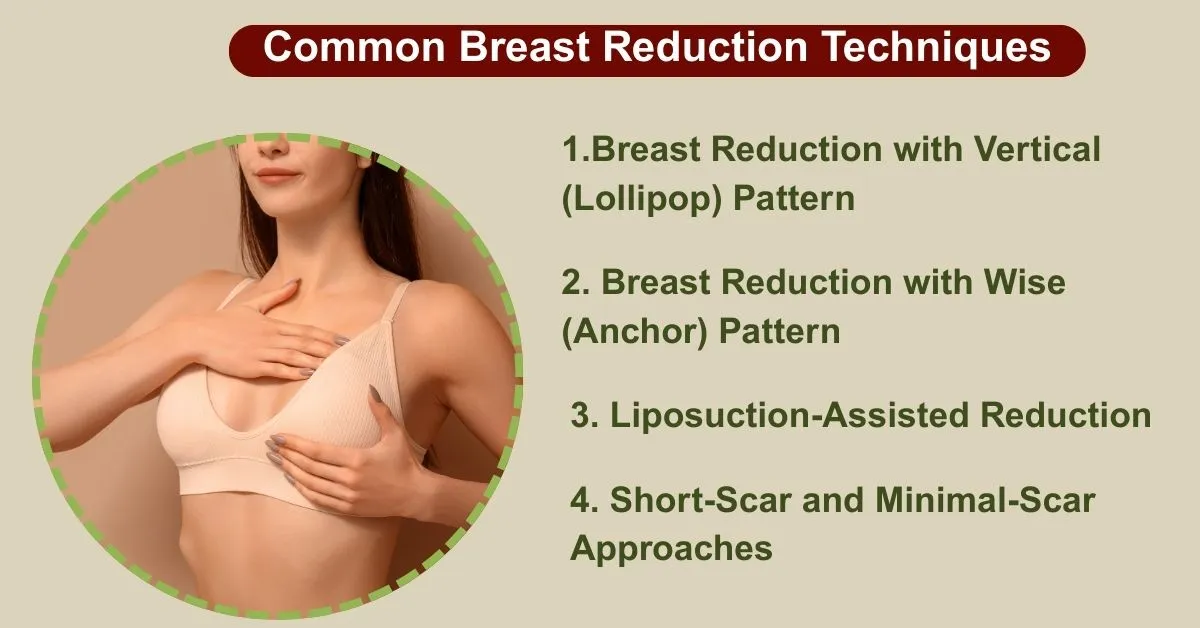
- This method uses two incisions: around the areola and a vertical cut down the breast. It is helpful for those with moderate breast enlargement.
- Benefits include a shorter scar and better shaping. Patients usually recover quicker because less skin is removed.
- This method is helpful for people with very large breasts or significant sagging. It uses three incisions: around the areola, down the breast, and across the fold.
- It provides maximum control in shaping and lifting. Many patients with chronic pain or posture issues choose this option.
- If the breast consists mostly of fatty tissue and the skin has good elasticity, liposuction can reduce breast volume. It works well for people who want smaller breasts with minimal scarring.
- It also suits patients who want a quicker recovery.
- Surgeons now use improved markings, precise dissection techniques, and better suturing to reduce scarring.
- Patients often choose these methods for a more youthful and lifted look.
Breast Reduction with Vertical (Lollipop) Pattern
Breast Reduction with Wise (Anchor) Pattern
Breast Reduction with Wise (Anchor) Pattern
Short-Scar and Minimal-Scar Approaches
How Advancements in Medicine Changed Breast Reduction
New tools and technologies have made the surgery less invasive and more predictable. These improvements also support long-term comfort and results.
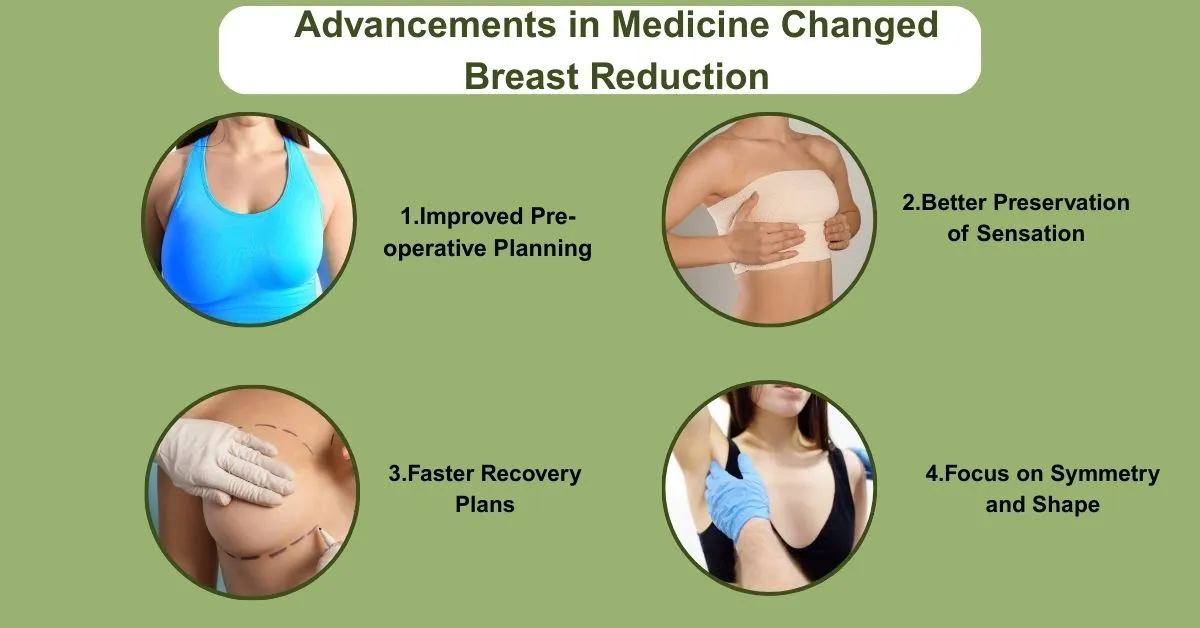
- Digital scans and photographs help surgeons plan the reduction with accuracy. You can now see possible outcomes and discuss preferences clearly.
- Surgeons aim to protect nipple sensation and breastfeeding ability. This change has been a major development in the last few years.
- Modern pain management, smaller incisions, and better surgical tools help patients return to work sooner.
- Light exercise is often possible in a short time.
- Surgeons no longer focus only on reducing weight. Today, shaping, contouring, and lifting are part of every procedure.
- This gives a natural profile and long-lasting results.
Improved Pre-operative Planning
Better Preservation of Sensation
Faster Recovery Plans
Focus on Symmetry and Shape
Current Trends in Breast Reduction Surgery
Breast reduction trends speak to what people want today: comfort, confidence, and natural results.
- People choose this surgery because of back pain, shoulder grooves, skin irritation, poor posture, and lifestyle limitations.
- Younger patients often seek relief to participate in sports without discomfort.
- Patients prefer methods that allow quick return to work or daily activities.
- Surgeons now design plans that match each person's routine and expectations.
- Patients today want a balanced, natural size instead of overly reduced breasts.
- Long-term proportion is the priority.
- Many patients combine reduction with a lifting technique.
- This gives a youthful, firm shape after removing excess tissue.
- Modern scar-care routines help reduce visible marks.
- Patients now use silicone therapy, lasers, and guided aftercare.
- There is growing awareness of male breast enlargement, known as gynecomastia.
- Men now openly seek reduction for comfort and confidence.
- Surgeons also discuss posture, exercise, nutrition, and emotional wellness.
- Patients feel more supported throughout the journey.
Trend 1: Functional Goals Over Cosmetic Goals
Trend 2: Demand for Shorter Recovery
Trend 3: Smaller, Natural Breast Shape
Trend 4: Breast Reduction with Lift
Trend 5: Interest in Scar Management
Trend 6: Breast Reduction for Men
Trend 7: Holistic Approach
Important Factors to Consider Before Choosing Breast Reduction
Before surgery, patients should discuss goals, health needs, and concerns. Here are a few key points to think about.
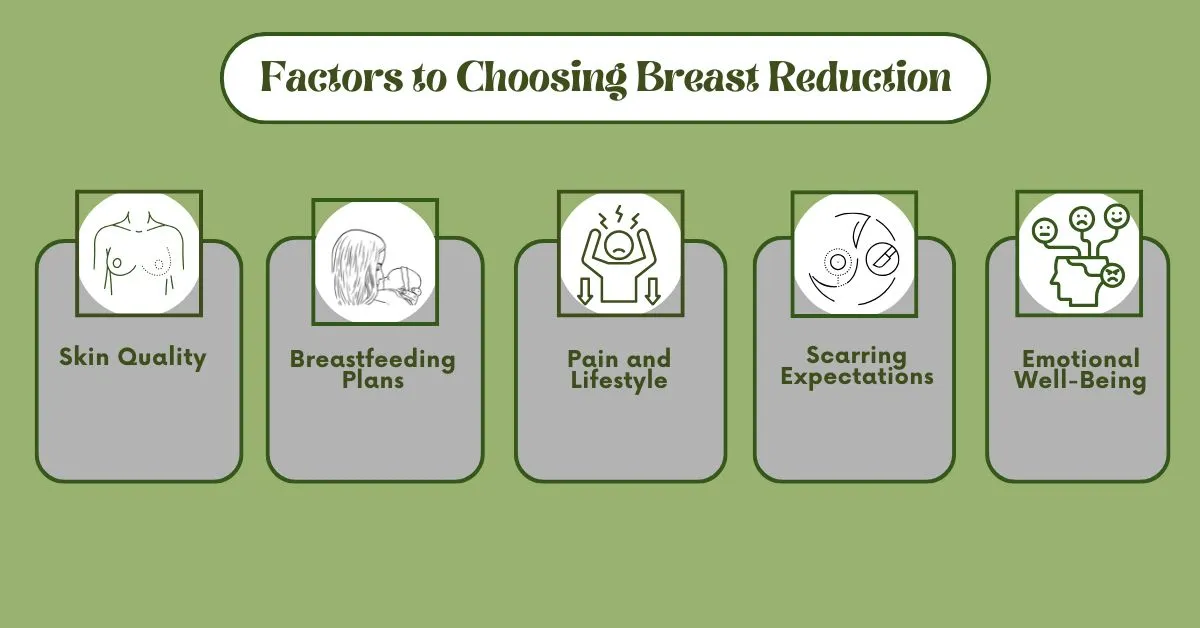
- Elastic skin heals better and helps maintain shape.
- Certain techniques preserve breastfeeding ability.
- Discuss your future plans with your surgeon.
- If heavy breasts limit your work, sports, or sleep, reduction can help.
- All breast reductions leave some scars, but these fade over time with proper care.
- Many people feel more confident and active after the surgery.
Skin Quality
Breastfeeding Plans
Pain and Lifestyle
Scarring Expectations
Emotional Well-Being
Meet Dr. Vinay Jacob
Dr. Vinay Jacob is a Senior Plastic and Reconstructive Surgeon in India with more than 25 years of experience. He completed his MBBS from St. John's Medical College, Bangalore in 1991 and his MS from Tata Memorial Hospital, Mumbai in 1996. He later earned his MCh and DNB in Plastic Surgery in 2001 with distinction.
Dr. Vinay Jacob specializes in gender-affirming surgery, facial and hand rejuvenation, nasal and respiratory procedures, limb salvage, body contouring, intimate and pelvic surgery, hernia repair, neurological pain procedures, and breast reconstruction . He consults at the Reconstructive Surgery Centre, 503 Sagar Fortune Building, Waterfield Road, Bandra West, Mumbai 400050.
For consultations, you can visit the clinic or call for an appointment.
FAQs
1. What is the recovery time after breast reduction?
Most patients return to light work in one to two weeks. Full recovery can take a few weeks. Each person heals differently based on the technique used and their daily activity level.
2. Will the results look natural?
Yes. Modern surgical techniques focus on shape, proportion, and a natural appearance. You can discuss your desired size and look during your consultation.
3. Is breastfeeding possible after breast reduction?
Many techniques preserve the milk ducts and nerves. You should share your future feeding plans with your surgeon so they can tailor the procedure.
4. Can breast reduction help with back and neck pain?
Yes. Reducing breast weight improves posture and reduces strain on muscles and joints. Many patients experience relief soon after surgery.
5. Are the scars noticeable?
Scars fade over time. With proper care and good surgical technique, most patients find their scars lighten and blend with the skin.
Conclusion
Breast reduction surgery has come a long way from its early methods. Today, it focuses on comfort, confidence, and long-term well-being. You have many safe and effective options to choose from. If you feel limited by heavy breasts or discomfort, a detailed discussion with an experienced surgeon can guide you toward the right path.